
Most building owners don’t wake up thinking about their sprinkler system. It’s out of sight, out of mind — until a failed inspection report lands on your desk, the fire marshal leaves a notice, a tenant calls with concerns, or worse, until something actually happens.
A fire sprinkler inspection isn’t paperwork or a rubber stamp; it’s a detailed, technical look at the system that could be the only thing standing between a contained incident and a devastating loss. And the person performing that inspection? Their qualifications matter more than most people realize.
There’s a major difference between someone who is simply licensed and someone who is NICET-certified. On paper, both may be legally allowed to inspect. In practice, the depth of knowledge, testing accuracy, and long-term liability protection can look different.
Licensed vs NICET-Certified: What’s the Difference?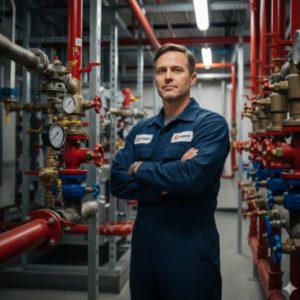
A licensed professional has met state or local requirements to perform inspection work legally. That’s important because it means they’re authorized and accountable.
But NICET certification is a different level of qualification. NICET (National Institute for Certification in Engineering Technologies) certification requires documented field experience, technical examinations, and ongoing continuing education specifically in fire protection systems. It’s earned through testing and real-world verification of expertise.
When someone is NICET-certified, it signals that they don’t just “do inspections”— they understand hydraulic calculations, component functionality, system impairments, code requirements, and testing protocols at a deeper level.
That difference shows up during a fire sprinkler system inspection when issues aren’t obvious. A licensed technician might check the boxes. A NICET-certified professional understands why each component matters and how one small issue can affect the entire system.
Why This Matters for Building Owners and Property Managers
If you own or manage a commercial property, you already know inspections are mandatory. But compliance alone isn’t protection.
Insurance carriers, AHJs (Authorities Having Jurisdiction), and fire marshals expect documentation to be accurate, detailed, and code-compliant. If something goes wrong and your inspection was performed improperly, liability shifts fast.
A qualified professional performing a building sprinkler system inspection doesn’t just tag the system and leave. They test control valves, inspect gauges, check alarm devices, evaluate water flow, review obstruction risks, and document deficiencies clearly.
Fire Sprinkler Testing Is Technical
Many people assume fire sprinkler testing is a routine visual walkthrough, but it’s not.
Annual inspections, quarterly checks, and five-year internal pipe inspections all require specific testing procedures under NFPA standards. That includes:
- Flow testing
- Valve tamper verification
- Alarm transmission confirmation
- Pressure readings
- Standpipe evaluations
- Documentation that meets code standards
If the technician doesn’t fully understand the code references behind these tests, errors happen, and then they’re discovered at the worst possible time.
This is where NICET certification adds measurable value. It demonstrates tested knowledge of NFPA codes and the ability to interpret system performance accurately.
The Risk of “Good Enough”
In fire protection, “good enough” is expensive: a missed impairment, a control valve left partially closed, an alarm device not communicating, or corrosion inside piping. These are details that separate routine inspection from technical evaluation.
When inspectors lack advanced certification, they may rely heavily on checklists. But systems age, buildings change, tenants remodel, water supplies fluctuate, and every variable affects performance —so you want someone who understands systems, not just paperwork.
What You Should Ask Before Hiring an Inspection Company
Before scheduling your next inspection, ask:
- Are your inspectors NICET-certified?
- How many years of documented field experience do they have?
- Do you specialize strictly in inspection and testing?
- How detailed are your reports?
- Will deficiencies be clearly categorized and code-referenced?
A professional company won’t hesitate to answer. Companies that focus exclusively on inspection and testing — and do not install systems — eliminate conflict of interest. Their job is to evaluate and report, not upsell replacements. That distinction matters.
Compliance Is the Minimum — Protection Is the Goal.
Every commercial building requires regular inspection to ensure quality that directly impacts:
- Tenant safety
- Insurance standing
- Legal liability
- Emergency readiness
- Business continuity
The goal is to ensure that if the system ever activates, it performs exactly as designed. That takes training, experience, and certification beyond the basics.
Choose Inspection Expertise That Protects What You’ve Built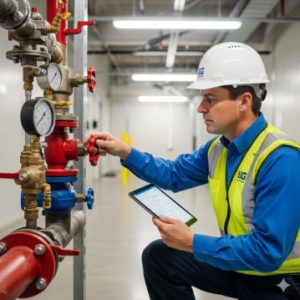
When you schedule an inspection, you’re trusting someone to evaluate a life-safety system that protects your property, your tenants, and your reputation.
Veteran Fire Protection specializes strictly in inspection and testing services. We do not install systems; our focus is compliance-driven and rooted in technical accuracy. With experienced professionals who understand NFPA standards inside and out, detailed reporting, and a reputation for reliability, we provide the level of precision commercial properties require.
If your building is due — or overdue — for inspection, don’t settle for minimum qualification. Call Veteran Fire Protection today and schedule your inspection with professionals who treat safety like it’s personal.