

Nobody thinks about the pipes above their ceiling. Why would they? They’re up there, completely out of sight, tucked behind drywall and drop ceilings, doing their job without ever asking for acknowledgment or attention. And as long as the building is standing, the alarms are quiet, and nothing has gone visibly wrong, there’s genuinely no reason for anyone to stop, look up, and wonder.
Inside those pipes, something is already happening in buildings that look perfectly safe, perfectly maintained, perfectly under control. Slowly, without a single warning sign, corrosion is working quietly, patiently, and completely out of sight until the day it can’t be ignored anymore.
By then, it’s usually already too late to avoid the hard conversation. And the hard bill.
What Corrosion Actually Does to a Fire Sprinkler System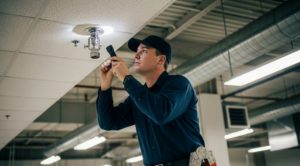
Most people carry a simple assumption about fire sprinkler systems: it’s there, it’s installed, it passed inspection at some point, so it must still be fine. That assumption is understandable. It’s also in a lot of buildings across the country.
Corrosion — driven by oxygen, moisture, and the natural chemistry of metal pipes aging inside walls for years — gradually weakens the system from the inside out. Not all at once. Not in a way that triggers any alarm. Just steadily, invisibly, in ways that nobody sees until the evidence shows up somewhere deeply inconvenient.
It narrows pipe walls little by little. It creates pinhole leaks nobody notices until a ceiling tile is stained or a water bill quietly climbs. It builds up deposits that restrict water flow at precisely the moment flow matters most — when there’s fire, when there’s smoke, when every single second is doing real and irreversible work.
A system that looks perfectly functional from the outside can be severely compromised on the inside. And nobody finds out until there’s smoke in the hallway and the system that was supposed to protect everyone quietly fails the only test that ever really mattered.
That’s not a hypothetical. It happens. And it happens most often in buildings where everyone assumed things were fine — because nothing had gone wrong yet.
The Buildings Most at Risk Are the Ones That Feel the Safest
Older buildings with aging infrastructure that nobody has examined closely in a decade. Properties that changed ownership without anyone asking hard questions about maintenance history. Facilities where the sprinkler system has functioned without incident for so long that the idea of it quietly deteriorating never crosses anyone’s mind — because why would it?
Dry pipe systems — common in cold climates and unheated spaces like parking garages — are especially vulnerable. The repeated cycling of air and moisture creates near-perfect conditions for corrosion that eats through metal faster than most building owners would believe.
A professional fire sprinkler inspection doesn’t just confirm the system exists. It looks inside — at pipe condition, water quality, and internal buildup, no visual walkthrough would catch — to determine whether the system will actually perform when called upon. That distinction matters more than most people realize. And it almost always matters too late.
What Gets Missed When Inspections Get Skipped
Deferred inspections are one of the most quietly costly decisions a building owner can make. Not because inspections are expensive — they’re genuinely not, relative to what they prevent — but because the problems they catch are almost always dramatically cheaper to fix early than late.
Pinhole leaks become full pipe replacements. Localized corrosion becomes system-wide failure. A minor obstruction becomes a complete fire sprinkler repair job affecting multiple zones and a budget nobody planned for. The math never — not once — works out in favor of waiting.
A thorough fire sprinkler system inspection goes further than any standard walkthrough — examining internal pipe conditions, testing water samples for corrosion byproducts, and identifying vulnerabilities before they become emergencies nobody saw coming. This is the scrutiny that actually protects a building and the people inside it. Everything else is just checking a box and hoping the system never has to prove itself.
Veteran Fire Protection: The Team That Takes This Seriously
Veteran Fire Protection was built on one uncompromising understanding — fire safety isn’t paperwork. It’s not a compliance checkbox or an annual formality. It’s the difference between a building that survives and one that doesn’t.
Whether you need a routine inspection, a corrosion assessment, or emergency repair work, Veteran Fire Protection shows up prepared, qualified, and committed to getting it right — not just compliant, but actually right. Contact Veteran Fire Protection at 888-588-5526 and schedule your inspection today.