
Life safety hardware isn’t like HVAC units. You don’t just wait until it blows warm air to call someone out. When fire protection gear fails, it fails hard—leaving you with unpayable emergency sprinkler repair bills, denied insurance payouts, or a shutdown order from the local fire marshal.
Setting up a routine schedule for your fire sprinkler services isn’t just about clearing a compliance hurdle. It’s about keeping your building open and keeping your operating budget from getting wrecked by predictable surprises.
The Actual Cost of Skipping Routine Service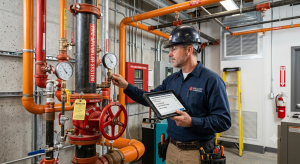
“If it isn’t broken, don’t fix it” is a terrible strategy for fire suppression systems. Wet and dry systems sit pressurized for years without moving. During that downtime, three big problems develop silently:
- Internal Corrosion: Oxygen mixed with steel pipe and standing water creates a breeding ground for tuberculation and Microbiologically Influenced Corrosion (MIC). Thinning pipe walls eventually pinhole, and heavy scale builds up until it chokes off your water flow.
- Surprise After-Hours Repairs: Most 3 AM service calls are 100% preventable. They start as tiny drips or slow pressure drops that anyone would catch during a standard fire sprinkler system inspection.
- Voided Insurance Policies: Local AHJ demands up-to-date NFPA 25 inspection records. If you suffer a fire loss and your compliance binder is missing annual test records, your insurance carrier’s legal team will jump at the chance to deny or slash your payout.
The Facility Manager’s Maintenance Checklist
You don’t need an engineering degree to keep an eye on your system, but you do need a mix of quick staff walk-throughs and certified field service.
Weekly & Monthly: On-Site Visual Audits
- Check Control Valves: Make sure every main, section, and riser valve is chained open, tamper switched, or locked in position.
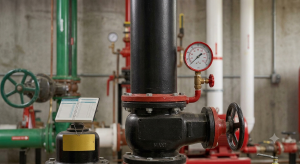
- Gauges: Take a quick glance at air and water pressure gauges. A sudden 10 PSI drop means a leak or a valve problem upstream.
- Clearance: Keep boxes, pallets, and temporary storage at least 18 inches below standard heads. Stop letting warehouse staff stack pallets straight to the roof.
Quarterly & Semi-Annual: Mechanical Tests
This is where a licensed technician connects test gear and exercises moving parts:
- Main Drain Tests: Techs open the main drain valve to record static and residual pressure. A sudden drop in residual pressure tells you there’s an abstraction, severe corrosion, or a partially closed municipal curb valve down the street.
- Waterflow Alarms: Testing water motor gongs and flow switches ensures the system actually alerts the monitoring company the second a head opens.
- Vane Switches: Checking response timing so pressure surges don’t cause false alarms that summon the fire department for no reason.
Annual & 5-Year Mandates: The Heavy Lifting
Multi-year checks go deep into mechanical integrity:
- Full Fire Sprinkler System Testing: Complete trip testing on dry pipe systems, backflow preventer flow testing, and anti-freeze loop concentration checks.
- Building Sprinkler System Inspection: A physical head-by-head audit checking for painted-over heads, rust, physical damage, or bent hangers.
- 5-Year Internal Pipe Inspection: Opening cross-mains and branch lines to physically look inside for scale, mud, or internal rust that could jam a head during a real emergency.
Why Planned Service Costs Way Less Than Emergency Calls
Every facility manager works with tight budgets. But skipping routine service to save a few hundred bucks usually ends up costing thousands later:
- No Emergency Labor Rates: After-hours emergency sprinkler repair dispatches come with double-time rates, trip fees, and rush shipping fees for parts. Replacing a worn valve on a scheduled Tuesday afternoon costs a small fraction of fixing it when it fails on Sunday night.
- Fewer Full Pipe Replacements: Catching localized corrosion early means you can flush the line or swap out a 10-foot section. Ignoring it means you’ll eventually have to replace the whole riser loop.
- Keeps Your Insurance Discounts: Commercial property underwriters reward sites that maintain strict NFPA 25 testing records. Keeping your building sprinkler system inspection paperwork clean locks in those lower annual premiums.
Don’t Rely on Amateurs for Compliance Work
When an AHJ inspector or an insurance adjuster asks to see your fire logs, they want clean data, accurate pressure differentials, and clear proof that deficiencies got fixed.
Working with experienced, certified techs means you get real answers, not just checkboxes on a piece of paper. They catch small issues like a sluggish dry-pipe valve or a leaking backflow check valve long before it turns into a building shutdown order.
 Need Your Fire Protection Systems Checked Out?
Stop waiting for a surprise code violation or a midnight pipe burst to figure out if your system works. Veteran Fire Protection provides real fire sprinkler testing, preventive maintenance programs, and fast deficiency repairs built around your schedule. Call our team today at 800-557-8189 to schedule your next fire sprinkler inspection or set up a hassle-free maintenance plan for your building.